
Legal Information About Cheques
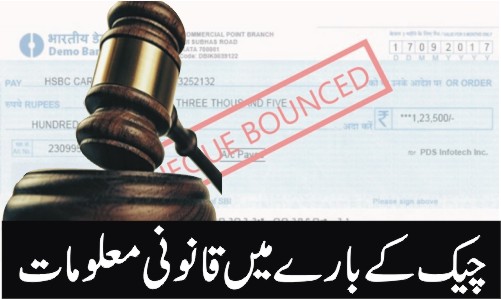
Today I'll tell you about cheques: 1. What is the importance of a cheque? 2. How is a cheque issued? 3. If a cheque is dishonoured, what is the procedure? 4. Which laws deal with this?
Keep one thing in mind: whenever someone gives you a cheque, whether to repay a debt, to fulfil some obligation, to pay for goods purchased, or any other kind of transaction, the person issuing the cheque is doing so for the purpose of payment. When that person gives you a cheque, you need to be careful about certain things: that it's made out in your name, the date is written correctly, the amount is written correctly, both in figures and in words, and that the signature was made in front of you. If someone gives you a cheque to repay a debt, to fulfil an obligation, and you cash that cheque or deposit it into your account to be cleared, and it is dishonoured, and it is established that he gave you that cheque in bad faith, intending to swallow up your money, just to reassure you, then the very first step, which people often fail to take, is: send him a legal notice. In an FIR, people often write a closing line saying, I contacted him, he stalled at first, then he started threatening me, but courts don't accept these things. These have become routine, stock phrases: today my cheque was dishonoured, seven days later I applied for registration of a case, and then after inquiry the case was registered. That's not how the proper legal procedure works. First you must send him a legal notice, stating the reason he gave you that cheque, that he gave it to you for payment, and you don't need a lawyer for this, you can do it yourself, these are simple matters: in such-and-such context, I was owed payment, you gave me a cheque dated such-and-such, of such-and-such bank, cheque number such-and-such, and I deposited that cheque in my account to cash it, or I went to cash it, and that cheque was dishonoured, either there were no funds in your account, or your account was dormant, or there were funds in your account but you had stopped payment, anything is possible, there are ten or twelve possible reasons, any of them could apply.
Now, once the cheque is dishonoured, you must send this legal notice, this legal notice sent through registered AD post, with acknowledgment of receipt, so it also comes back showing whether he received it or not, or whether he refused it. After sending that legal notice, based on that same legal notice, you write a text addressed to the SHO of the relevant police station, an application for registration of a case, and in it you write the whole story: I gave these things, or I gave this amount, and in that context he was supposed to return this amount to me, to return the money he gave me this cheque, this is the cheque number, this cheque is from such-and-such bank, dated such-and-such, of such-and-such value, and when I deposited or tried to cash this cheque, it was dishonoured. After it was dishonoured, I sent him a legal notice. Whether he responded to the legal notice or not, whatever the situation, after that he became defiant, and after becoming defiant, I have come to you requesting action be taken against him, and your case will be registered under Section 489-F of the Pakistan Penal Code.
While on this topic, let me also tell you about another related issue: what procedure is available to you if the police don't register your case. You submitted an application for registration of a case at the relevant police station, the SHO isn't registering it, isn't registering your FIR. Now, when your FIR isn't being registered, what procedure is available to you? The Supreme Court of Pakistan has held that if you go to the SHO and your case isn't registered on your application, then, staying within the police department hierarchy, go to his superiors, go to the SP, go to the SSP, go to the DIG, whichever level applies, saying, sir, I filed this application for registration of a case, the accused has admitted the offence, the SHO is colluding with him, the SHO is not registering the case. Or the SHO hasn't colluded with anyone, but is refusing to register the case just to keep his own crime statistics low, to make sure the minimum number of cases occurred in my jurisdiction during my tenure, so that his record looks good. If you're going to the SP, SSP, or DIG, that's just one single forum, I'm not saying you have to go to the SP, then to the SSP, then to the DIG, then to the IG, no, just one forum. When you take your application to the SP or SSP, and you wait ten to fifteen, twenty days, and if there's still no response, then, through a lawyer, under Section 22-A/22-B of the Code of Criminal Procedure, you file an application before the Sessions Judge, under these sections, requesting a direction for registration of a case, saying, sir, I applied to the SHO too, here is his diary number, I applied to the SSP, or the SP, or the DIG too, here is that diary number, but they are not registering my case, even though my application discloses a cognizable offence, the elements are clearly made out. The High Court has given the Sessions Judge the powers of a Justice of the Peace for this. The Sessions Judge or Additional Sessions Judge, acting as Justice of the Peace, will call for comments from the police. Whether those comments come or not, he will hear you, hear your application, read your application, examine your evidence. If he believes your case should be registered, he will issue a direction. You take that direction to the SHO. If the SHO still doesn't register the case, then you file a compliance petition in that same court, commonly called a contempt-of-court application, but legally termed a compliance petition, saying, your honour, you passed this order, the SHO is not implementing it, please enforce it. The judge will summon the SHO, and after summoning him, bind him to register the case. If your case still isn't registered, you can file a writ in the High Court. And if the Justice of the Peace heard you and, after hearing you, you believe his order was wrong, that he did not give a direction to register the case, to register the FIR, you can challenge that order in the High Court too, by filing a writ, filing a writ petition, and if the honourable High Court finds that your case is stronger, it will give you that direction. So that's what to do if your case isn't being registered.
Now let me come back to the cheque. All these remedies under 489-F are now covered. Here people make a mistake. What mistake? Once a case is registered under Section 489-F of the Pakistan Penal Code, people think that on the basis of this same case, their money will be recovered. In eighty percent of cases it does get recovered, no doubt about that. People are afraid of going to jail, or people get tired of being in jail, not knowing whether bail will happen or not, so they say, let's just settle, give some money, some in instalments, all of it, half of it, whatever the arrangement, and matters get resolved this way. But a cheque is an instrument. Recovery cannot happen simply on the basis of an FIR. These are not recovery courts. On the basis of a criminal case registration, if you ask any court to get your money recovered for you, keep in mind, these are not recovery courts. The proper forum for that is: on the very same basis on which you got the FIR registered, on that same basis you file a recovery suit before an Additional Sessions Judge, you'll file it before the Sessions Judge, it will be marked to an Additional Sessions Judge, under Order 37 of the Civil Procedure Code. This doesn't take years and years, don't think it takes years, a summary procedure is adopted here. When you file your suit properly, in that suit the defendant, who is also the accused in your FIR, the court will not easily allow him to appear in the case and contest it, the court will say, give me reasons why I should let you defend this. If he can't give those reasons, then the suit will be decreed as a straightforward decree, accepted, and after acceptance the file goes into execution, and once execution proceedings begin, you will get your recovery, whether through the sale of his property or by sending him to jail. So if a 489-F case for a dishonoured cheque runs alongside an Order 37 recovery suit, and if these two run together, you'll get out of this mess much faster. Now, whoever files a suit under Order 37, keep one thing in mind: get the facts right, along with dates, don't just write in the suit vaguely that so-and-so came, so-and-so didn't, write it with dates, with reasons, your lawyer will write it for you if you hire a good lawyer, but you should instruct your lawyer that the fee you've paid me, the fifteen thousand rupees in court fees on this, the expenses incurred on this, should not only be attached to the suit but also claimed in the relief sought, so that when this suit is decreed, you also get your court fee back, you also get your lawyer's fee back. Why should the fee you paid your lawyer be returned to you? Why should your court fee be returned to you? Why should your expenses be returned to you? Because you were sitting quietly at home, it was this accused who forced you to come to court, it was this defendant who forced you to come to court, you were a straightforward businessman, or you simply helped him, or you gave him a loan, whatever the situation was. You didn't come to court out of your own choice, he brought you there, and if your lawyer can establish that we came to this court because of him, and we won, and we were in the right, and if he had accepted our right and given us what was owed, we wouldn't have had to come to these courts, we wouldn't have had to pay lawyers' fees, so these lawyers' fees, these expenses, this court fee, we had to pay because he forced us, so get this recovered from him too, and the courts will grant it. In ninety percent of Order 37 suits, this relief is not claimed, which is why it's not awarded. I hope I have explained to you the whole procedure regarding cheques and regarding cases that don't get registered.
Comments
No comments yet. Be the first to share your thoughts.